Q3 Estimated Taxes Due September 15: What Self-Employed Filers Need to Know
This article is for general informational purposes only and does not constitute personalized tax, legal, or financial advice. Please consult a qualified tax professional for guidance specific to your situation.
Quick Answer
The third-quarter (Q3) estimated tax payment deadline for 2026 is September 15, 2026. If you are self-employed, a freelancer, an independent contractor, a gig worker, or a small business owner who expects to owe $1,000 or more in federal income tax this year, you are generally required to make quarterly estimated tax payments to the IRS. Missing the September 15 deadline can result in an underpayment penalty — even if you plan to pay in full at tax time. Read on to learn how much to pay, how to pay, and how to protect yourself from IRS penalties.
Why Estimated Taxes Exist — and Why They Matter to You
The U.S. tax system operates on a pay-as-you-go basis. Employees have federal and state income taxes withheld from every paycheck by their employer. But if you are self-employed, run a small business, earn freelance income, receive significant investment income, or have any other income source without automatic withholding, the IRS expects you to make tax payments throughout the year rather than waiting until April.
Those payments are called estimated tax payments, and they are typically due four times a year. If you wait until you file your annual return to pay everything you owe, the IRS may assess an underpayment penalty — even if you ultimately write a check for the full amount owed.
The 2026 Estimated Tax Deadline Calendar
For the 2026 tax year, the IRS quarterly estimated tax due dates are:
- Q1 — April 15, 2026 (income earned January 1 – March 31)
- Q2 — June 16, 2026 (income earned April 1 – May 31)
- Q3 — September 15, 2026 (income earned June 1 – August 31) ← Coming up now
- Q4 — January 15, 2027 (income earned September 1 – December 31)
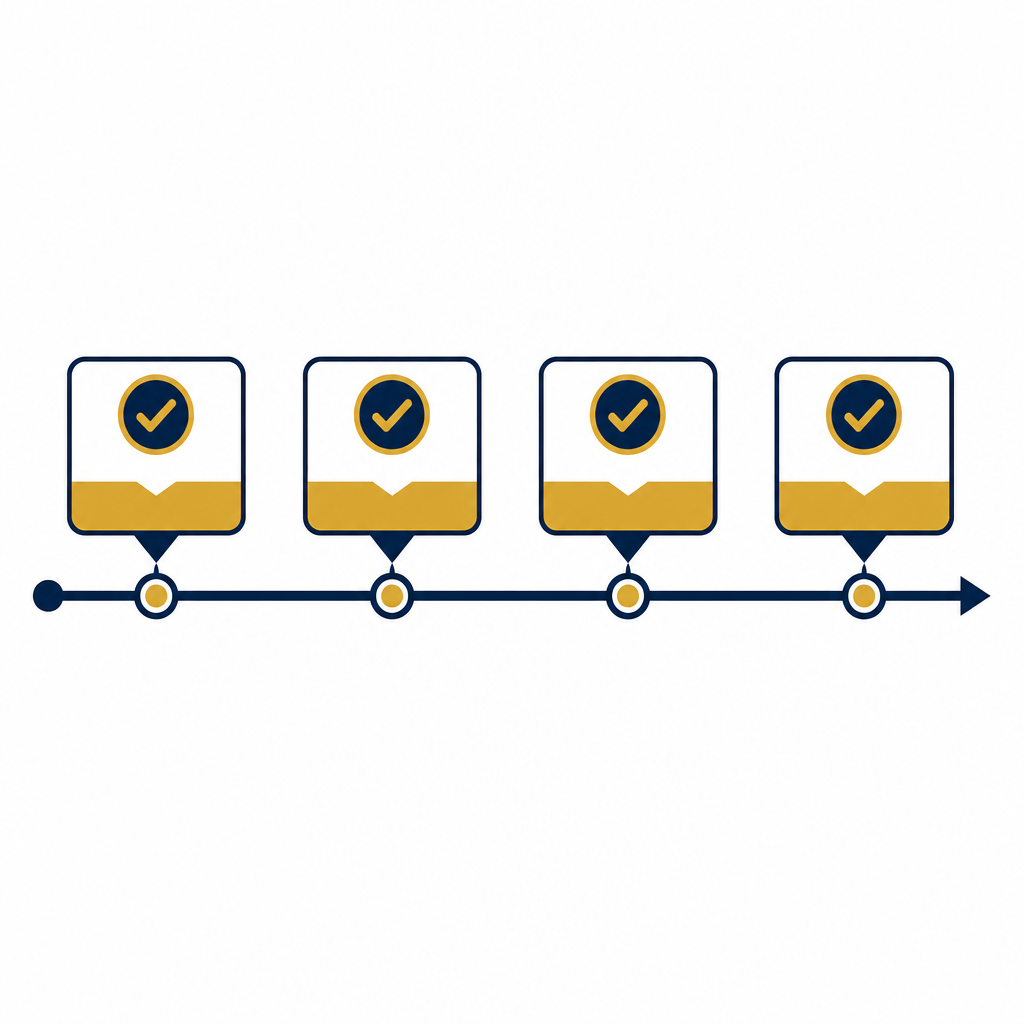
Note: If a deadline falls on a weekend or federal holiday, it moves to the next business day. Always verify current dates at IRS.gov.
Who Is Required to Make Estimated Tax Payments?
You generally need to make quarterly estimated tax payments if both of the following apply:
- You expect to owe at least $1,000 in federal income tax for 2026 after subtracting any withholding and tax credits.
- Your withholding and tax credits will cover less than 90% of what you owe for 2026, or less than 100% of the tax shown on your 2025 return (110% if your 2025 adjusted gross income exceeded $150,000).
Common taxpayers who typically need to pay estimated taxes include:
- Freelancers and independent contractors
- Gig economy workers (rideshare, delivery, tutoring, etc.)
- Sole proprietors and self-employed business owners
- Partners in a partnership or S-corporation shareholders
- Landlords with significant rental income
- Investors with capital gains or dividend income not covered by withholding
- Retirees receiving pension, Social Security, or IRA distributions without sufficient withholding
How to Calculate Your Q3 Estimated Tax Payment
There are two reliable methods the IRS recognizes for calculating what you owe each quarter:
Method 1: The Safe Harbor Method (Most Popular)
Pay at least 100% of last year's tax bill spread evenly across four payments (or 110% if your prior-year AGI exceeded $150,000). This approach protects you from underpayment penalties regardless of how much more you end up earning this year. It is the most commonly recommended method for self-employed individuals whose income varies from year to year.
Example: If you owed $8,000 in federal taxes for 2025, your safe harbor quarterly payment would be $2,000 per quarter ($8,000 ÷ 4). Even if you earn significantly more in 2026, you will not owe an underpayment penalty as long as each quarterly payment was made on time.
Method 2: The Annualized Income Method (Better for Variable Income)
Estimate your actual net income for the year, calculate the resulting tax liability, subtract any expected credits, and pay 25% of that amount each quarter. This method is more accurate but requires you to project your income. Use IRS Form 1040-ES and its included worksheet to run these calculations.
Example: If you project your self-employment net income for 2026 will be $60,000, your estimated federal self-employment tax plus income tax might total approximately $12,000–$14,000 depending on your deductions. One quarterly payment would be roughly $3,000–$3,500.
Don't Forget Self-Employment Tax
In addition to federal income tax, self-employed individuals owe self-employment (SE) tax — currently 15.3% on net earnings up to the Social Security wage base, plus 2.9% Medicare tax above that threshold. SE tax replaces the Social Security and Medicare taxes that employers and employees each normally split. The good news: you can deduct half of your SE tax as an adjustment to income on your return, which reduces your taxable income.
How to Make Your Q3 Estimated Tax Payment
The IRS offers several convenient ways to submit your payment before the September 15 deadline:
- IRS Direct Pay (free): Pay directly from your bank account at IRS.gov/DirectPay. No registration required.
- IRS Online Account: If you have an IRS online account, you can view your balance history and pay directly.
- Electronic Federal Tax Payment System (EFTPS): A free service that allows you to schedule and track all federal tax payments. Registration is required but recommended for business owners who make regular payments.
- IRS2Go Mobile App: Make payments from your smartphone through the official IRS app.
- Credit or Debit Card (fee applies): Pay through an IRS-approved third-party payment processor. Convenience fees typically range from 1.75% to 1.98%.
- Check or Money Order: Mail a check payable to "United States Treasury" with a completed Form 1040-ES payment voucher. Make sure it is postmarked by September 15.
Pro tip: Digital payment methods (Direct Pay, EFTPS) are faster, more secure, and give you an immediate confirmation number. Always save your confirmation for your records.
What Happens If You Miss the September 15 Deadline?
Missing an estimated tax deadline does not trigger a notice or an automatic collection action the way a missed filing deadline might — but it does result in an IRS underpayment penalty. The penalty is calculated using the federal short-term interest rate plus 3%, applied to the amount that was underpaid, for each day it remains unpaid. The IRS computes this automatically when you file your annual return using Form 2210.
Key points to understand:
- The penalty applies even if you are owed a refund overall at tax time.
- It accrues from the due date of the missed payment — not from April 15.
- Making a late payment as soon as possible minimizes the penalty amount.
- In some cases (major disaster, unusual circumstances, or first-time underpayment), the IRS may waive the penalty. A tax professional can help you request a waiver.
Smart Tax Planning Tips for the Rest of 2026
With Q3 behind you and Q4 starting September 1, this is also a great time to take stock of your full-year tax picture:
- Review your income projection. Have your earnings come in higher than expected? Adjust Q4 to avoid a large balance due in April 2027.
- Maximize deductions now. Self-employed individuals can deduct home office expenses, business mileage, professional subscriptions, health insurance premiums, and retirement contributions. Make sure you are tracking everything throughout the year.
- Consider a SEP-IRA or Solo 401(k) contribution. These self-employed retirement accounts can significantly reduce your taxable income — and you generally have until your filing deadline (including extensions) to fund them for the prior tax year.
- Run a year-end tax projection. A mid-year or early Q4 tax projection with a qualified tax professional can reveal opportunities to reduce your 2026 tax bill before December 31 — the last day most tax-saving moves can be made.
State Estimated Taxes: Don't Forget Your State
Most states with an income tax also require estimated tax payments on a quarterly schedule. State deadlines typically mirror federal deadlines, but not always. Some states have different due dates, different threshold rules, or different calculation methods. Check with your state's tax agency or consult a tax professional to confirm your state obligations. Missing a state estimated tax deadline can result in its own separate penalty.
Frequently Asked Questions (FAQ)
What is the Q3 estimated tax deadline for 2026?
The Q3 estimated tax payment for the 2026 tax year is due on September 15, 2026. This covers income earned between June 1 and August 31, 2026.
How much should I pay in estimated taxes for Q3?
The safest approach is to pay 25% of your total prior-year tax liability (or 27.5% if your 2025 AGI exceeded $150,000). Alternatively, you can estimate your actual 2026 tax liability and pay 25% of that. Use IRS Form 1040-ES and its worksheet to calculate the amount that fits your situation.
What if I can't afford to pay the full estimated tax amount?
Pay as much as you can by September 15. The underpayment penalty is calculated on the unpaid balance, so a partial payment is always better than no payment. After filing your return, if you have a balance you cannot pay in full, the IRS offers payment plans (installment agreements) and other resolution options.
Do I need to file a form with my Q3 estimated tax payment?
Not necessarily. If you pay electronically through IRS Direct Pay or EFTPS, no form is required — your payment is automatically linked to your Social Security number and the correct tax period. If you mail a check, include the Q3 payment voucher from Form 1040-ES to ensure it is applied correctly.
Can I skip estimated taxes and just pay everything in April?
Technically, yes — but you will likely owe an underpayment penalty for each quarter you did not pay. The IRS will assess this penalty automatically when you file your return, even if you pay your full balance by April 15. The penalty is relatively small in low-underpayment situations but can add up if your tax bill is large.
I had a great income year so far. Should I pay more than the safe harbor amount?
If your income has significantly increased over last year, paying only the safe harbor minimum means you could face a large balance due in April 2027 — plus potentially higher state-level penalties. Running a mid-year projection and making an adjusted Q3 or Q4 payment can help you avoid an unwelcome surprise at tax time. A tax professional can help you calculate the right amount.
Don't Let the Q3 Deadline Catch You Off Guard — We Can Help
Whether you need help calculating your Q3 estimated payment, catching up on missed quarters, or planning ahead for the rest of 2026, the team at Champion Tax & Financial Services is here to help. We specialize in self-employed tax planning, IRS compliance, and year-round tax strategy for freelancers, small business owners, and individuals at every income level.
📞 Contact us today to schedule a tax planning consultation and make sure you're on track before the September 15 deadline — and for every quarter ahead.
Don't wait until April to think about your taxes. The right planning now saves money later.
Suggested internal links: Link "IRS compliance" to your IRS Resolution Services page • Link "payment plans" to your Tax Debt Relief page • Link "tax planning consultation" to your Contact/Book an Appointment page • Link "self-employed tax planning" to any related service page.
Suggested external references: IRS.gov — Form 1040-ES (Estimated Tax for Individuals) • IRS.gov — Publication 505 (Tax Withholding and Estimated Tax) • IRS.gov/DirectPay